
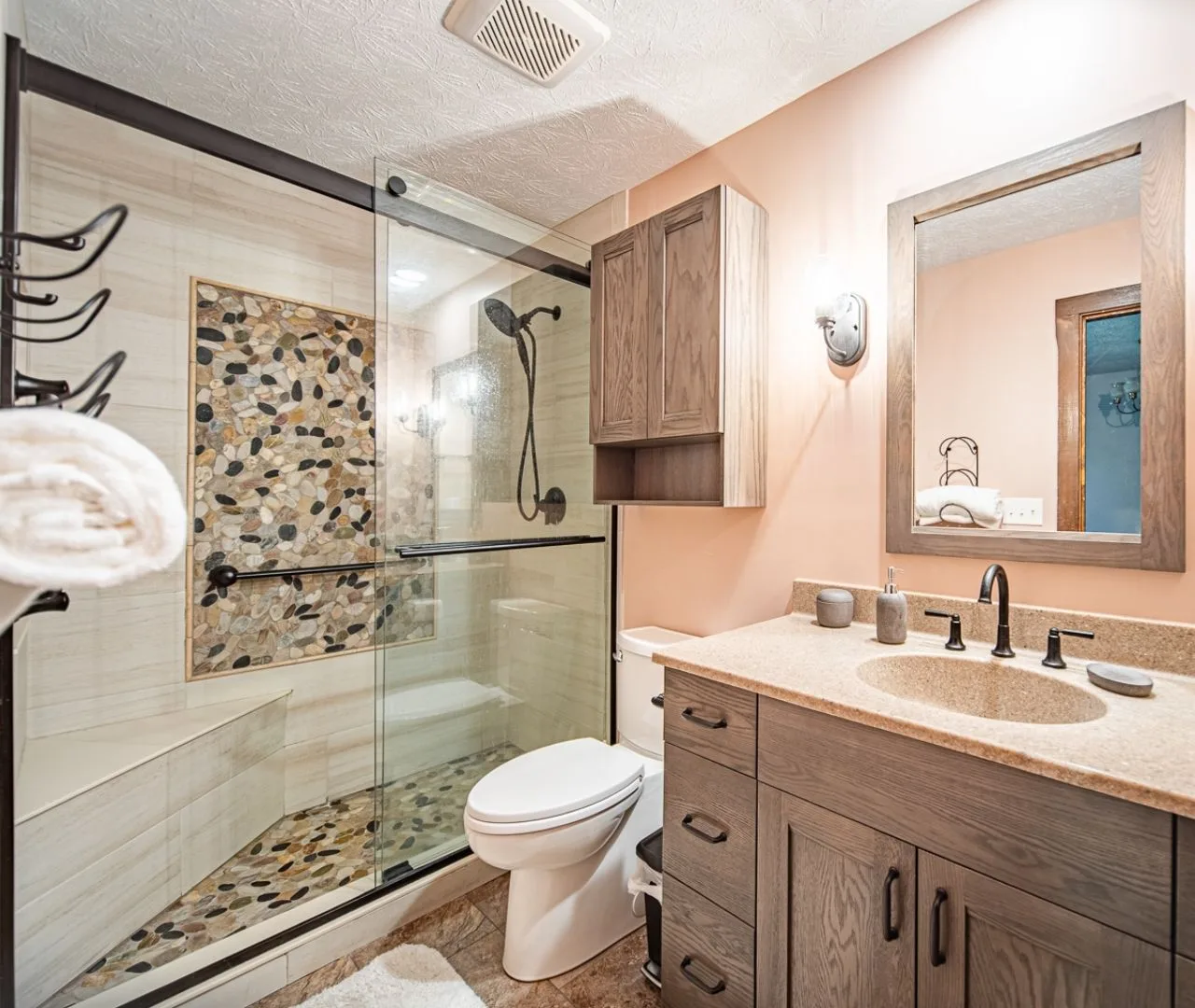
The useful question about a bathroom trend is not whether it appears in a photograph. It is whether it improves your room's daily use and will be practical to maintain. This revised guide revisits the design ideas discussed at this historical 2025 URL; it is not a claim about measured market popularity or guaranteed resale returns.
Keep the function behind the look
A floating vanity, a large mirror or a simpler shower enclosure can make a room feel less crowded. First check storage capacity, support requirements, plumbing access and cleaning access. Removing a bulky cabinet can improve sightlines while also removing the place where towels and toiletries used to live.
Write down what must fit inside the room, including everyday supplies, spare towels and cleaning products. Plan drawer and door clearance with the responsible designer. The best arrangement depends on the existing space, not on copying the dimensions of a photographed bathroom.
Use color where you can live with it
Wood tones, deep cabinet colors and patterned tile can all bring character to a bathroom. Compare samples under the room's actual lighting and next to the surfaces that will remain. Undertones can change how an apparently neutral paint, countertop or tile reads.
Decide which elements you are comfortable replacing later. Wall paint and accessories are different commitments from a tiled shower or a fabricated countertop. A restrained base with a few intentional details can be easier to adapt, but no palette is automatically timeless or suitable for every household.
Make lighting and storage part of the design
Decorative lighting should support, not replace, useful light around the mirror and in the rest of the room. Discuss placement, controls and any electrical changes with the responsible professional. Review fixture information for the location where it will be installed.
Storage features should be selected around actual objects. Check whether drawers accommodate taller bottles and whether doors clear adjacent fixtures. Avoid paying for an organizer that does not fit your routine. Keep access to serviceable plumbing and electrical components in the agreed plan.
Prioritize the parts photographs do not show
Ventilation, waterproofing preparation, substrate condition and compatible installation materials determine how a bathroom performs. Tile itself is not the waterproofing system. Follow the applicable product system and have the appropriate professionals assess site conditions and required approvals before the decorative layers conceal them.
Ask for a written scope that distinguishes preparation, supply, installation, trade work, disposal and finishing. Coordinate product lead times before demolition and discuss how changes will be approved. See our bathroom renovation service and fixture and finish planning guide for the next decisions.
Frequently asked questions
Should I avoid a trend if I plan to stay in my home?
Not necessarily. Choose details you enjoy and can maintain. Consider the cost and disruption of changing permanent surfaces later rather than relying on predictions about what every future buyer will prefer.
Does a larger tile mean less bathroom maintenance?
It can reduce the number of grout joints, but maintenance also depends on the tile, grout, layout, drainage and installation system. Confirm care requirements and suitability for the actual location before selecting a product.
Planning guidance is not a site-specific quote or a product guarantee. Confirm the products, scope and installation requirements with the responsible project professionals.