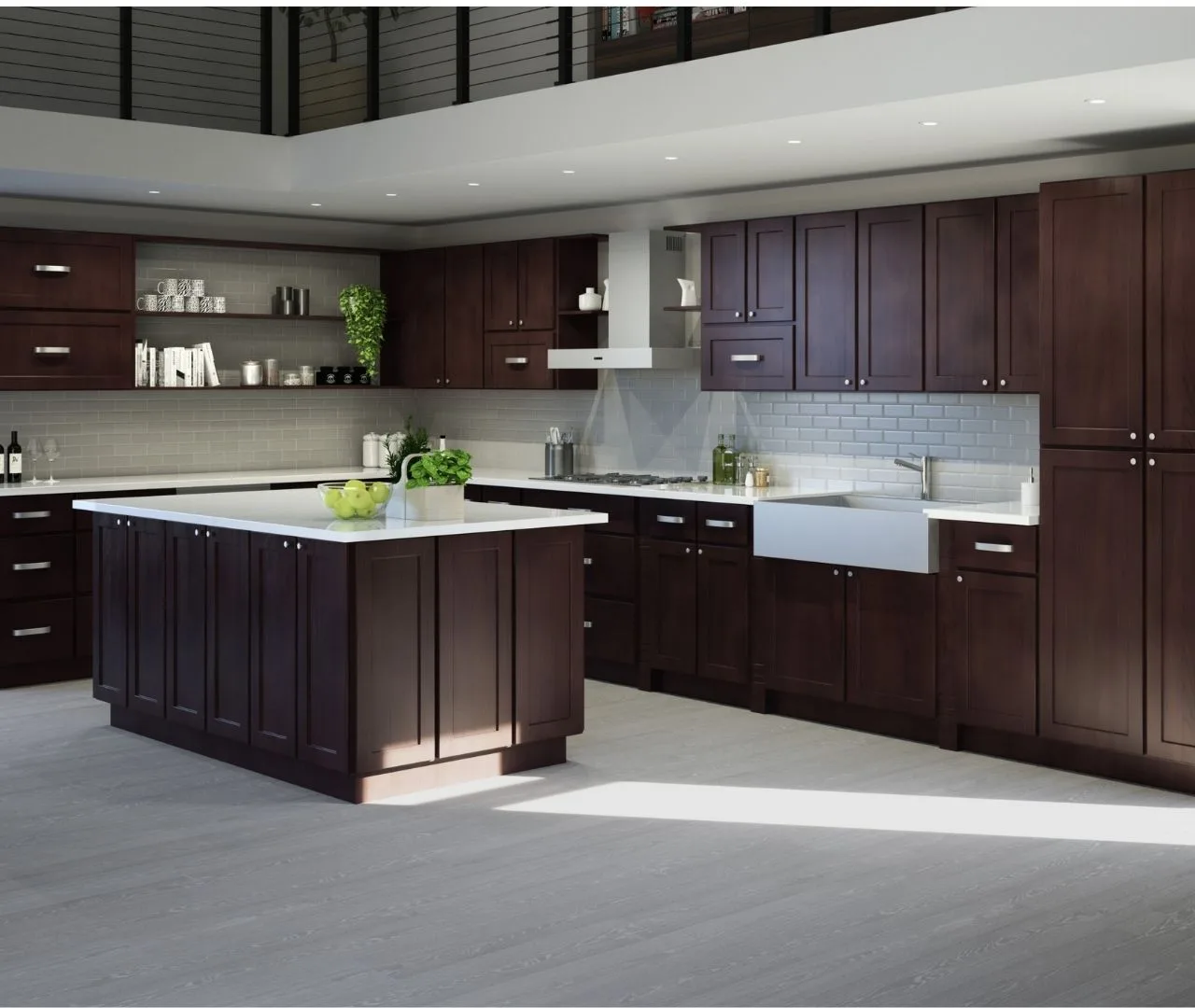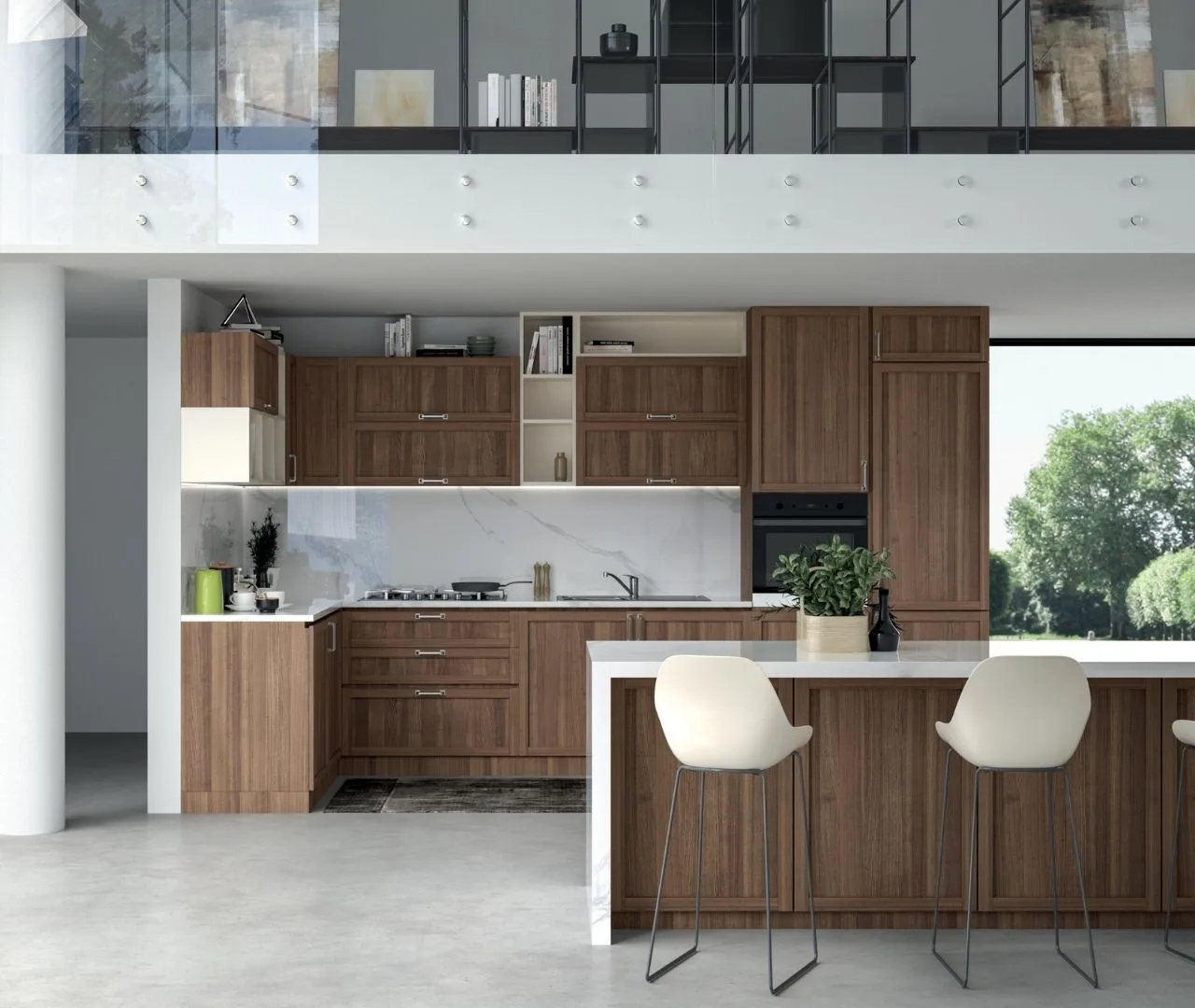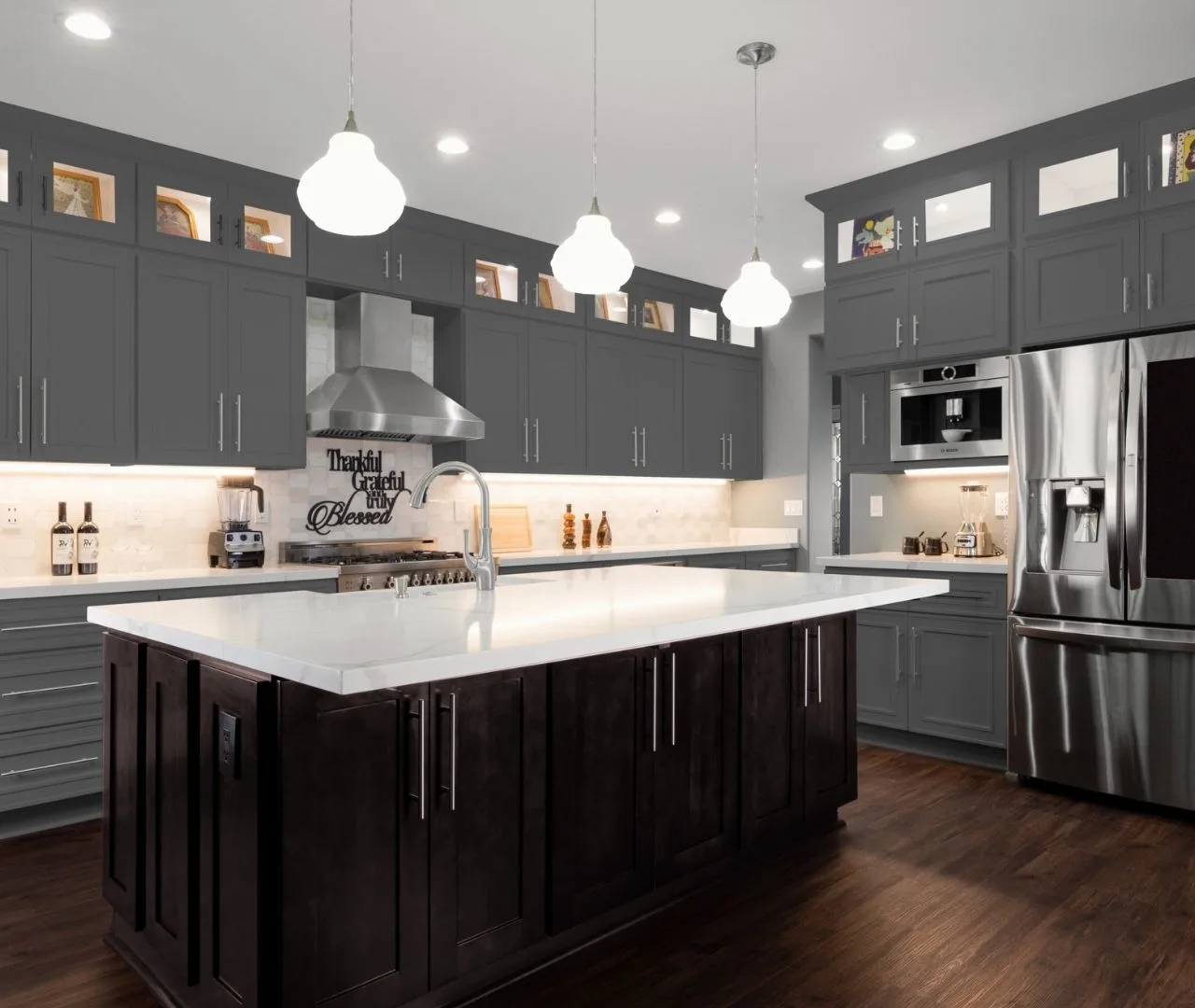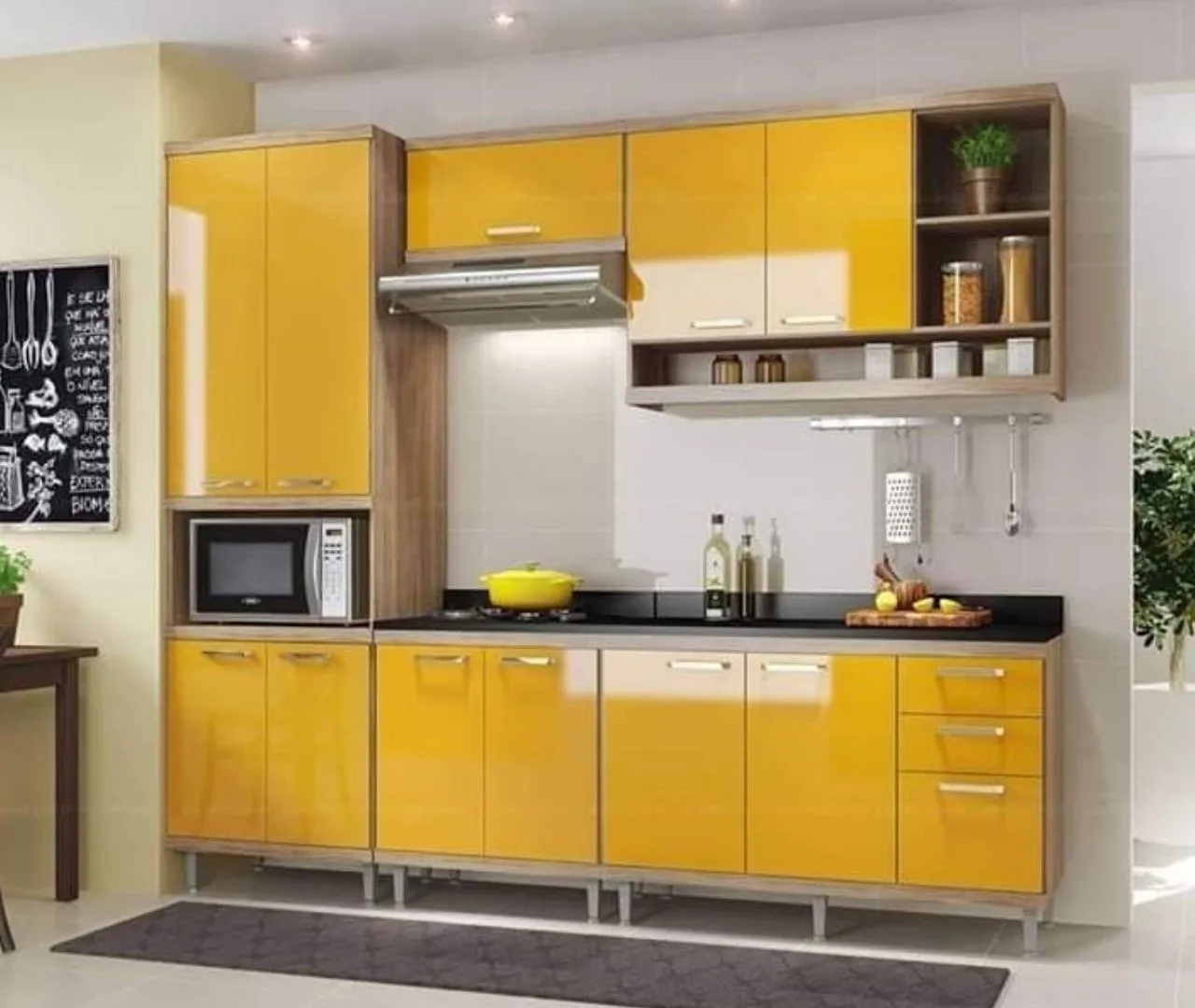
In most homes, kitchen cabinets do far more than store dishes and cookware. They determine how the kitchen functions, how it feels, and how well it holds up over time. If you are planning a kitchen remodel or considering a kitchen cabinet replacement, the decisions you make about cabinetry will affect the space for decades. Layout efficiency, storage capacity, door alignment, hinge durability, and finish performance all begin with the quality of your kitchen cabinet system. Across the United States, kitchen cabinets typically represent the largest material investment inside a renovation project. Because of that, understanding how cabinets are built — not just how they look — is critical. This guide breaks down everything that matters: construction standards, material choices, finish systems, storage engineering, and the most popular kitchen cabinet styles used in American homes today.
Kitchen cabinets were not always design features. Decades ago, they were simply enclosed boxes installed along the wall to hold cookware and pantry goods. Accessibility and workflow were secondary concerns. Today, kitchens are central living spaces. They open into dining rooms, connect to family rooms, and serve as gathering areas. As architecture evolved, so did the role of kitchen cabinets.
Modern kitchen cabinets now serve three essential purposes:
Instead of acting as background storage, cabinetry has become the framework that defines the kitchen.
When homeowners search for kitchen cabinet styles, they often focus first on appearance. While aesthetics matter, style also affects how light interacts with surfaces, how spacious the kitchen feels, and how well the design ages over time.
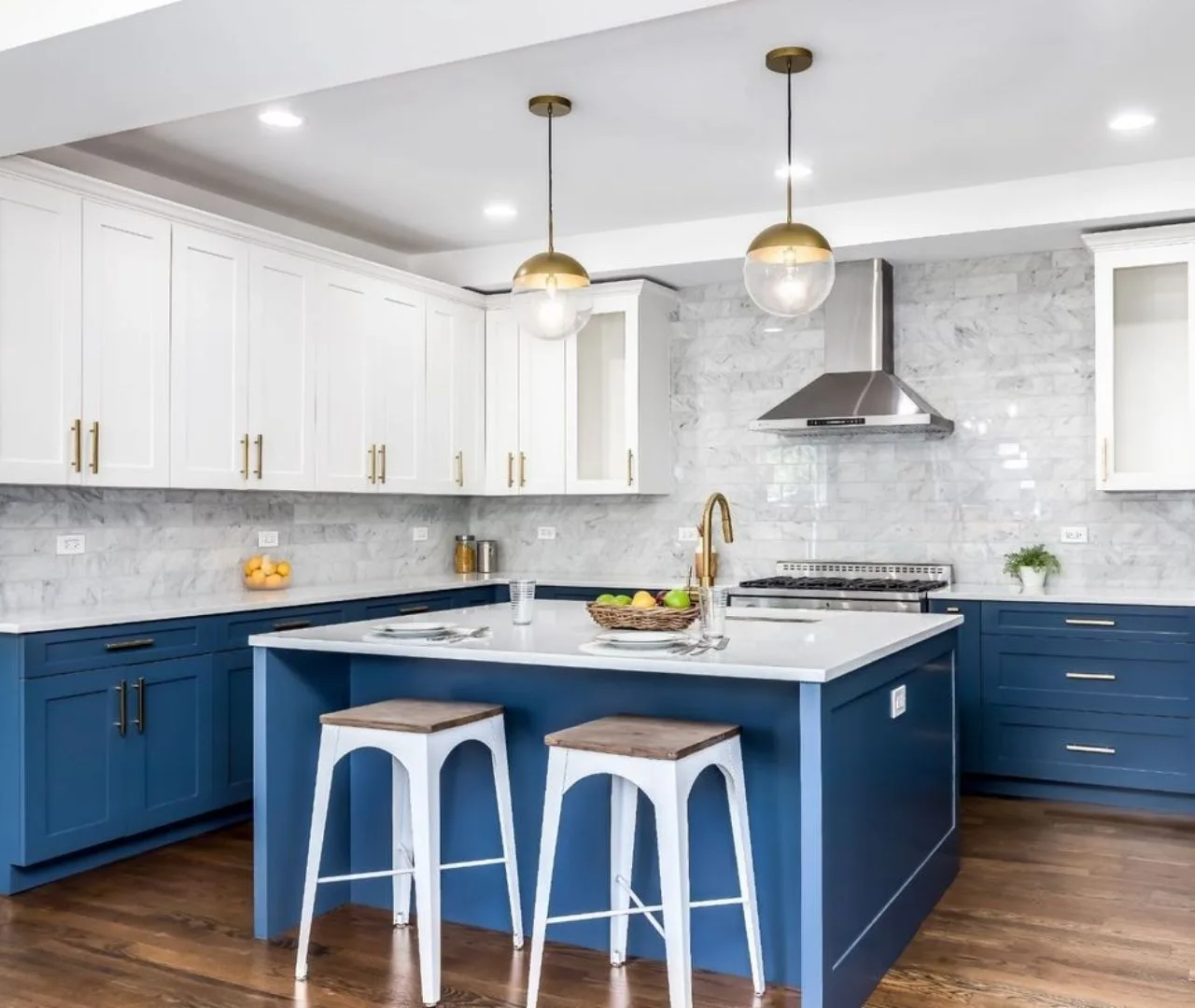
Shaker-style kitchen cabinets remain one of the most requested designs across the country. Their appeal is rooted in balance. A typical Shaker door includes:
This simple structure allows the cabinet to adapt to multiple design directions. It works in transitional homes, modern farmhouses, and even contemporary remodels. Homeowners often choose Shaker kitchen cabinets because they:
Shaker design provides flexibility. It can feel modern with a painted finish or traditional with a natural wood stain.
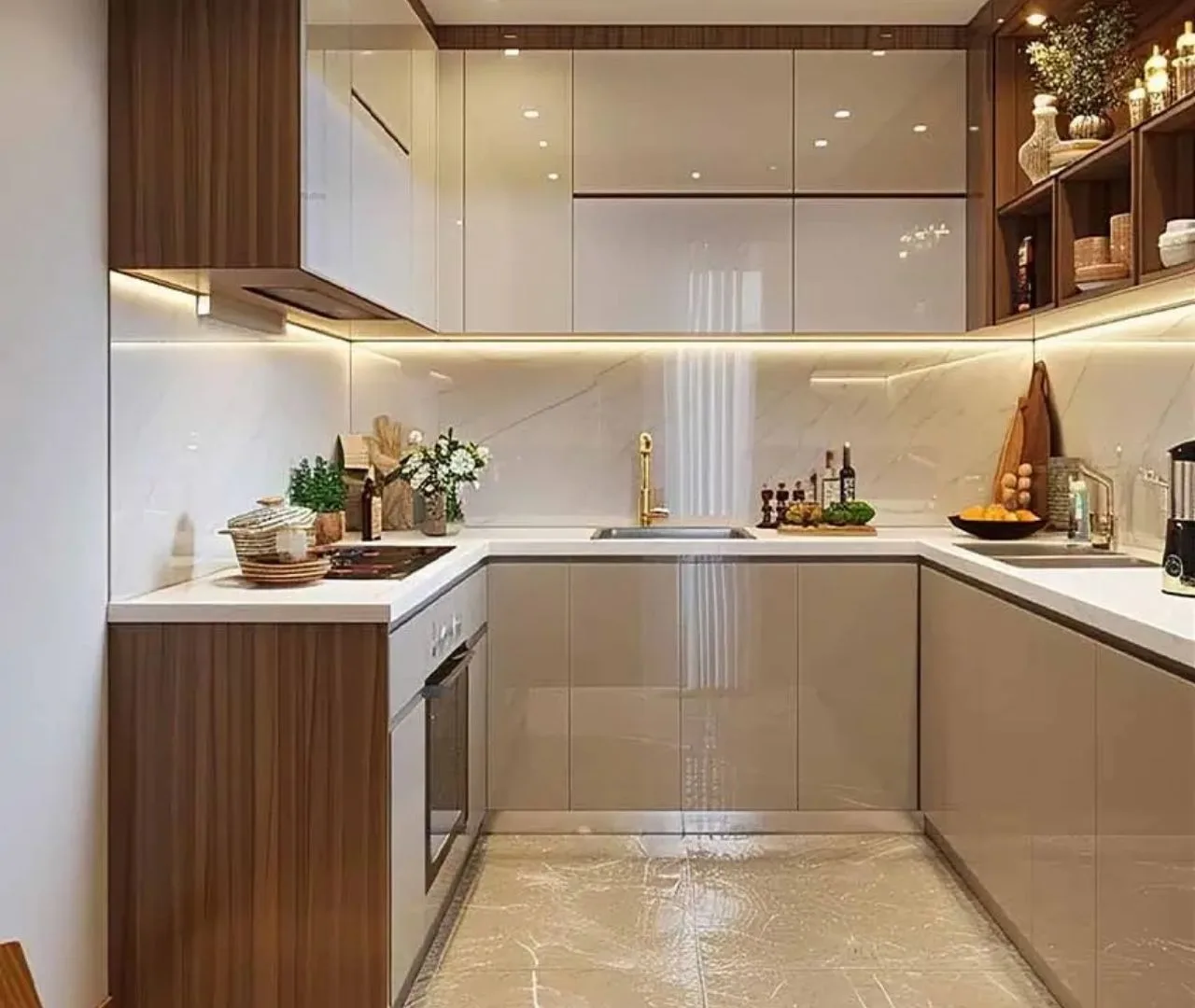
Slab cabinets are defined by a flat, uninterrupted door surface. There are no raised panels, grooves, or decorative frames. This style is frequently paired with frameless cabinet construction. Frameless kitchen cabinets eliminate the front face frame, increasing usable interior space and creating a seamless full overlay appearance. Slab kitchen cabinets are commonly selected for:
Because there are fewer grooves and edges, slab cabinets are also easier to maintain.
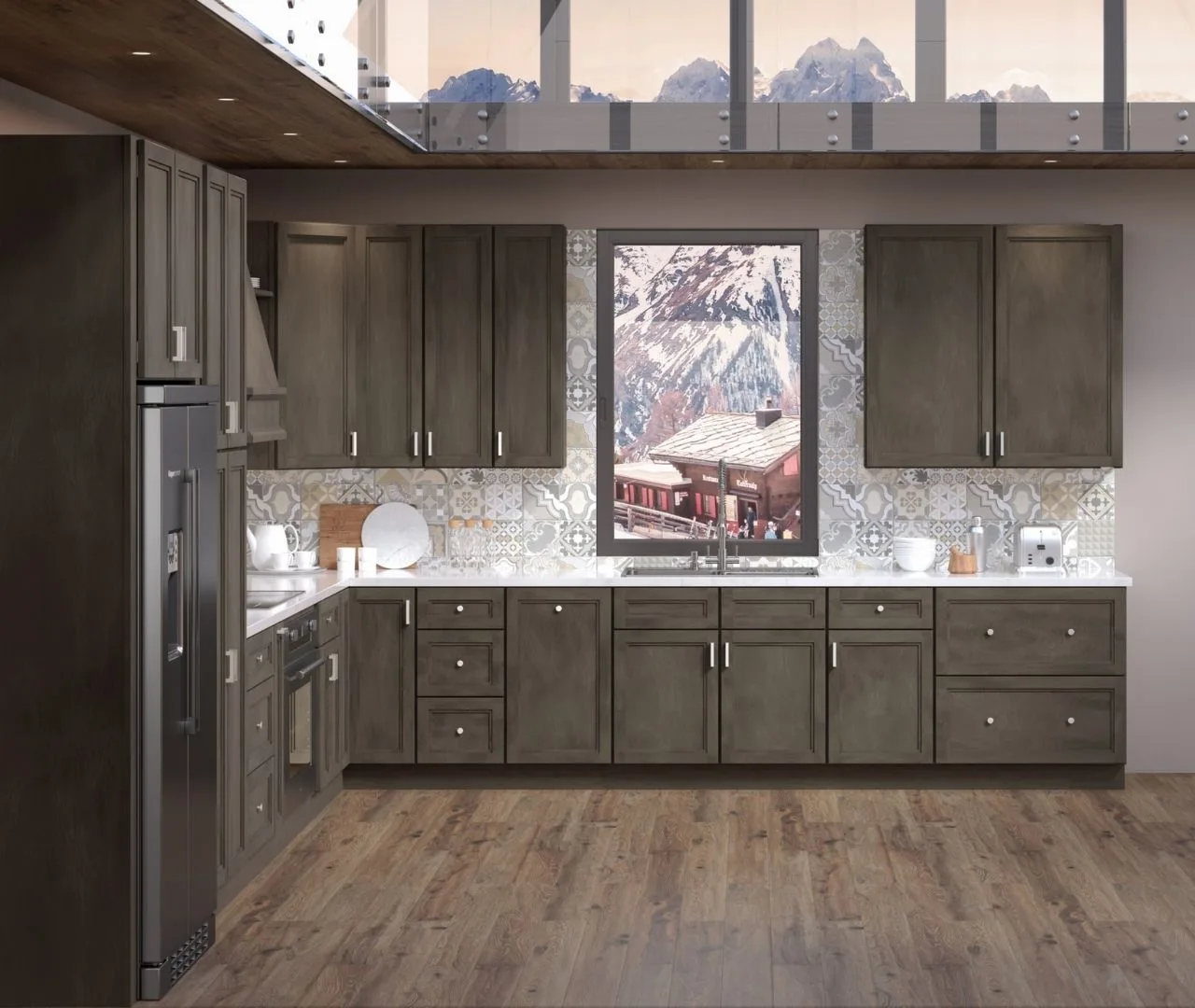
Raised panel kitchen cabinets offer more depth and contour. The center panel is slightly elevated or shaped, creating subtle shadow lines when light hits the surface. This design is often used in homes that include:
Raised panel cabinets bring dimension and formality. When constructed properly using plywood construction and strong joinery, they can deliver classic appearance without compromising structural strength.
Style may draw attention, but construction determines performance. A kitchen cabinet must withstand:
Four construction elements matter most:
High-quality kitchen cabinets in the U.S. commonly use plywood construction for the cabinet box. Plywood provides greater stability compared to particleboard, especially in humid environments.
Shelving thickness also matters. Thinner shelves are more prone to sagging over time. For long-term durability, 5/8-inch to 3/4-inch shelving is preferred.
When evaluating kitchen cabinets, internal construction should always take priority over surface finish.
Plywood construction is widely recognized as the standard for long-lasting kitchen cabinets.
Why does 3/4-inch plywood matter?
Because it provides:
Base kitchen cabinets that support granite or quartz countertops depend heavily on box strength. Inferior materials often lead to alignment issues or early cabinet replacement.
While thinner panels may reduce upfront cost, they typically reduce lifespan.
Hardware is often overlooked, yet it plays a major role in cabinet longevity.
Soft-close hinges prevent slamming. Over time, repeated impact stress can loosen screws and shift alignment. Soft-close systems reduce that strain.
Heavy-duty drawer slides should provide:
When hardware fails, homeowners often assume the entire kitchen cabinet must be replaced. In reality, durable hardware can extend cabinet life significantly.
Dovetail drawers are constructed using interlocking joints at each corner of the drawer box. This design resists separation under stress better than stapled or glued joints.
Dovetail construction:
In higher-quality kitchen cabinets and custom cabinetry, dovetail drawers are often considered a baseline standard.
When selecting kitchen cabinets, the material you choose will directly affect durability, maintenance, and long-term appearance. While door style defines aesthetics, the core material determines how well your kitchen cabinet system performs over time.
Cabinet materials must handle:
Understanding the difference between hardwood and engineered panels helps prevent premature kitchen cabinet replacement.
Solid wood remains a preferred option for stained kitchen cabinets. When combined with plywood construction cabinet boxes, hardwood doors provide both strength and visual warmth.
Common hardwood choices include:
Each wood species expands and contracts slightly with humidity changes. Proper sealing and finishing minimize movement and protect alignment.
For painted modern kitchen cabinets, engineered panels such as HDF (High-Density Fiberboard) and MDF are commonly used.
Unlike solid wood, these materials do not have natural grain direction. That means:
HDF, in particular, offers higher density than MDF, making it more resistant to minor surface dents.
When engineered doors are paired with plywood construction cabinet boxes, the result is a balanced system: smooth exterior finish with strong internal structure.
Finish quality determines how well kitchen cabinets resist stains, moisture, and surface damage.
Factory-applied finishes typically outperform on-site painting because they are applied in controlled environments with consistent curing conditions.
Common finish systems include:
Conversion varnish is widely used in high-quality kitchen cabinets because it undergoes chemical curing, forming a hardened protective layer. This finish resists:
Overlay design also affects visual outcome. Full overlay kitchen cabinets minimize visible frame gaps and create a streamlined appearance, especially in modern kitchen cabinets.
A strong finish system protects both the appearance and structural integrity of your kitchen cabinet investment.
Storage design has evolved significantly in modern kitchen cabinet planning.
Instead of relying on deep, fixed shelves, today’s kitchens prioritize accessibility. A well-planned kitchen cabinet system reduces unnecessary bending, stacking, and reaching.
Storage planning is typically divided into:
Active Storage – Daily-use cookware, utensils, and dishes.
Passive Storage – Seasonal appliances, bulk pantry items, and specialty cookware.
Smart storage solutions improve workflow and make the kitchen more efficient overall.
Deep drawers are increasingly replacing lower cabinet shelves.
Why? Because they allow
full
visibility and easier access.
Peg systems inside deep drawers:
This design reduces strain and makes heavy cookware easier to manage.
Tiered trays maximize vertical space in shallow drawers.
A two-tier system allows:
This approach enhances organization without requiring additional kitchen cabinets.
Concealed waste systems are now standard in many kitchen remodel projects.
Pull-out waste centers:
Integrated waste storage prevents disruption to the overall cabinet layout.
Spice storage varies based on layout.
Angled spice drawers allow top-down visibility and quick identification.
Narrow pull-out racks utilize slim spaces between cabinets, turning otherwise unused gaps
into
functional storage.
Both systems improve efficiency and reduce clutter.
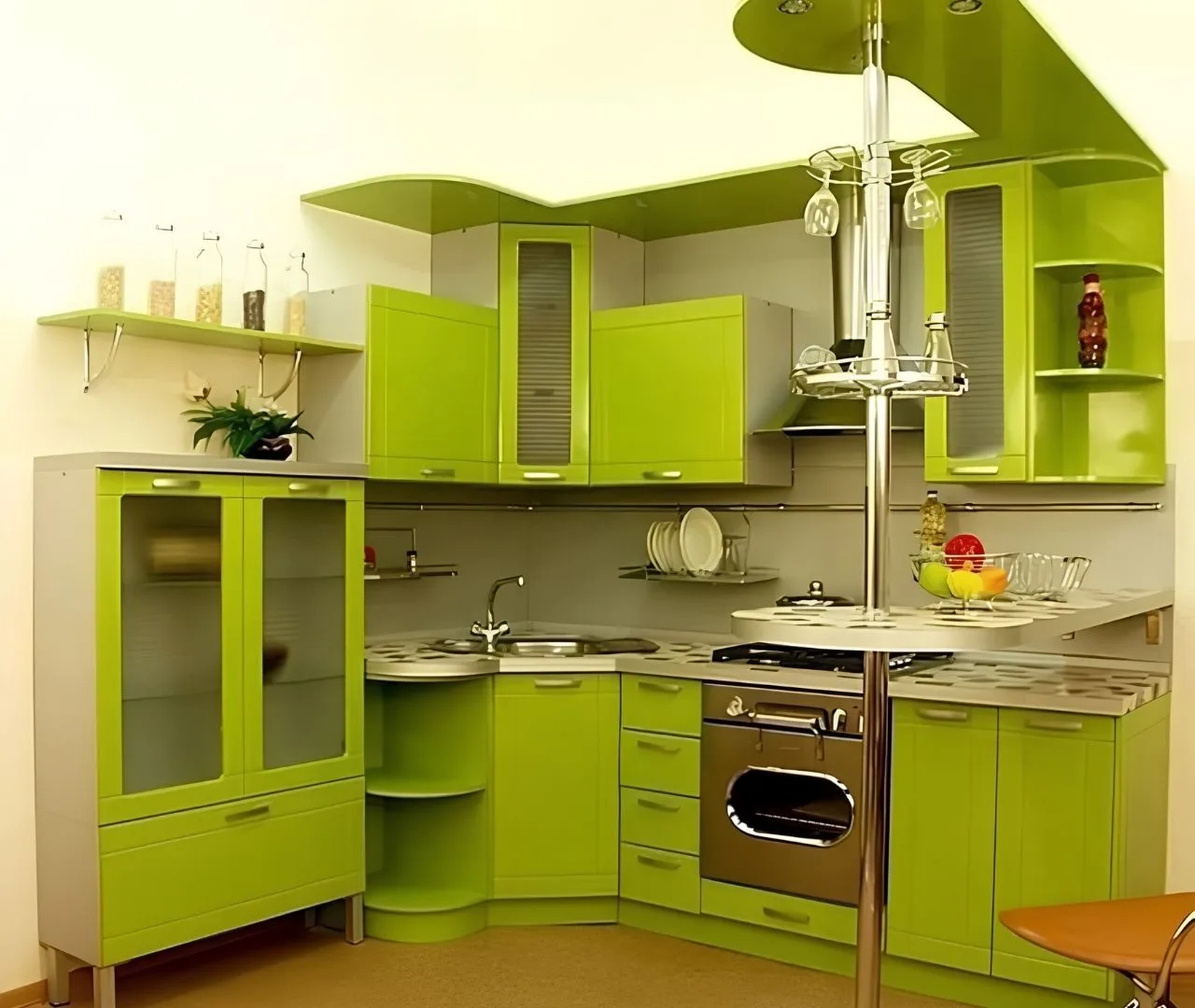
Corner cabinets often create hard-to-reach blind areas.
Mechanical corner systems, such as swing-out shelves, extend outward to provide access to
stored
items.
Benefits include:
For L-shaped kitchens, this can significantly improve storage performance.
Vertical dividers allow baking sheets and trays to be stored upright instead of stacked.
This method:
Vertical organization mirrors filing systems, making it easier to retrieve a single item.
Under-sink cabinets must accommodate plumbing lines.
U-shaped drawers and side-mounted
pull-outs help navigate these obstacles while maintaining usable storage.
Moisture-resistant
materials are especially important in this area.
Appliance lifts are designed to support heavy stand mixers and small
appliances.
Spring-assisted systems allow users to raise appliances to countertop height
without lifting strain.
This feature is often included in custom cabinetry for improved
ergonomics.
Drawer-based knife storage removes bulky countertop blocks.
Benefits include:
Integrated knife drawers maintain organization within the kitchen cabinet system.
Toe-kick drawers utilize the recessed space below base cabinets.
These shallow drawers are ideal for:
Capturing this unused space improves overall kitchen cabinet efficiency.
Kitchen cabinet investment is influenced by construction quality, material selection, finish system, and customization level.
Primary factors include:
Stock kitchen cabinets offer standardized sizing and faster lead times.
Semi-custom cabinets allow moderate dimensional flexibility and broader finish options.
Full custom cabinetry provides precise sizing, advanced storage solutions, and specialized materials.
When evaluating cost, long-term durability and reduced need for kitchen cabinet replacement should be considered alongside initial investment.
Even the highest-quality kitchen cabinets can underperform if improperly installed.
Professional installation includes:
Misalignment during installation can cause premature hinge wear and drawer tracking issues.
Precision installation protects the integrity of your kitchen cabinet system.
Kitchen cabinets are generally categorized into three construction tiers.
Stock Cabinets
Semi-Custom Cabinets
Full Custom Cabinetry
Choosing the right tier depends on layout complexity, timeline, and performance expectations.
Stock Cabinets:
Semi-Custom Cabinets:
Full Custom Cabinetry:
Selecting kitchen cabinets requires evaluating structural standards, material quality, storage efficiency, and finish durability.
Professional planning helps align:
Whether planning a kitchen remodel or a kitchen cabinet replacement, informed decisions protect your investment and ensure long-term performance.
reviews
(52)