
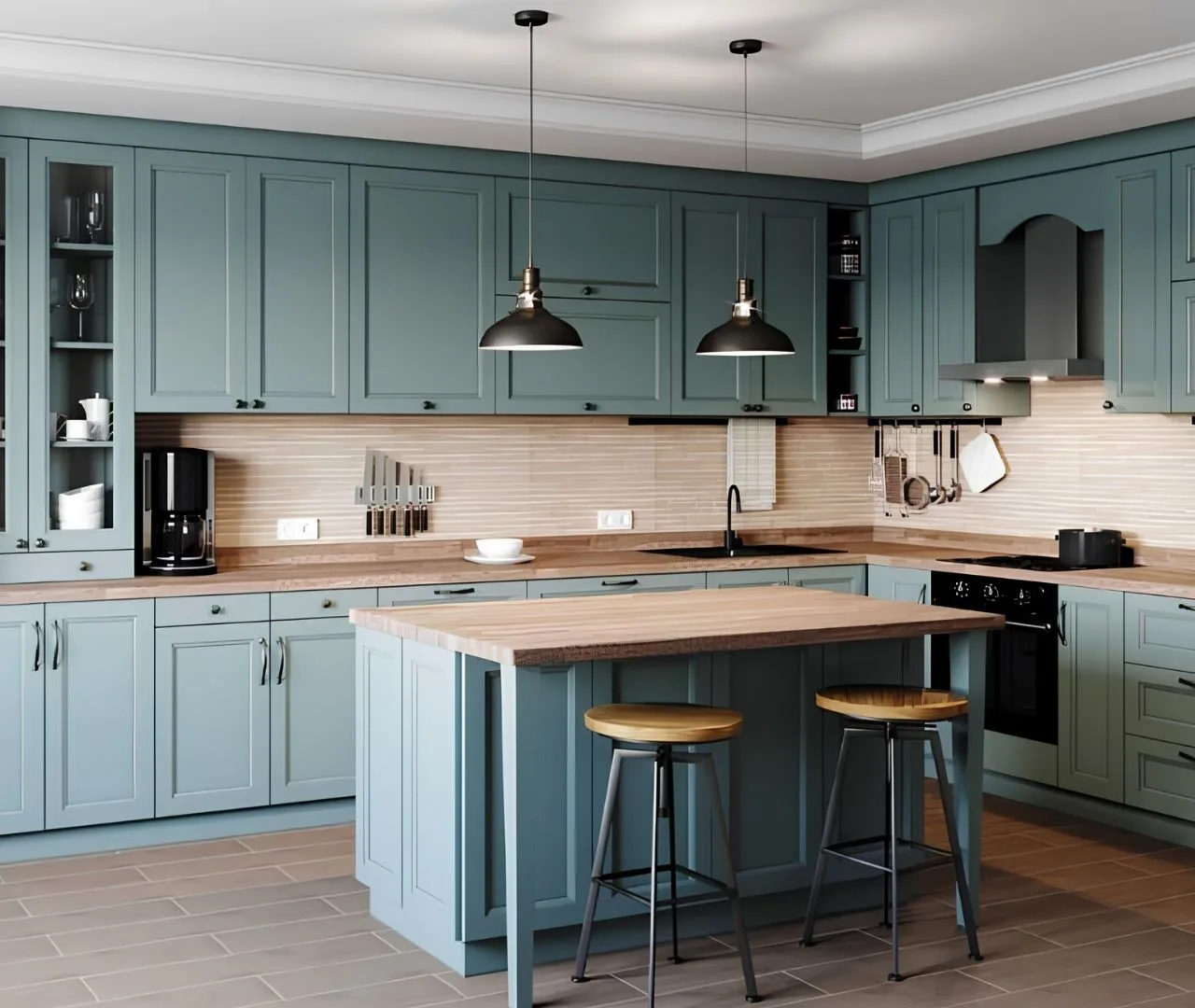
Matte and gloss describe how a cabinet surface reflects light, not how well the cabinet is built. Neither finish is automatically easier to maintain or more durable. Start with the exact door sample, its construction and its care instructions, then judge how it works in your kitchen.
Compare samples in the light you actually use
Place a sample vertically beside your countertop and backsplash rather than looking at it flat on a showroom table. View it in daylight and with the kitchen lights on. Gloss produces stronger reflections; a low-sheen surface spreads light more softly. A finish that looks calm under showroom lighting may show bright reflected fixtures at home.
Check the sample from seated and standing positions. In an open-plan room, consider what the cabinets reflect from the living area as well as from the cooking zone. A small kitchen does not require gloss: light distribution, cabinet proportions and the surrounding colors matter too.
Test fingerprints and cleaning without damaging the sample
Ask which cleaning products the manufacturer permits and whether the sample may be handled for a fingerprint test. Dark matte surfaces can still show oily marks; gloss can reveal smears and fine scratches. Texture, color and the specific coating influence what you notice.
Avoid choosing from broad promises such as “fingerprint-proof” unless they are supported for that exact product. Ask how marks, chips and edge damage are repaired and whether a matching touch-up product is available. Manufacturer-specific instructions take priority over a general cleaning tip.
Separate the finish decision from construction
- Identify the door material and the finish or facing applied to it.
- Inspect edges, corners and the back of the sample, not just its face.
- Compare hinge adjustments, drawer movement and the cabinet box specification.
- Check warranty exclusions for heat, moisture and cleaning products.
The sink, dishwasher and cooking area deserve particular attention. Discuss ventilation and appliance clearances with the project team; a decorative finish does not compensate for a leak or an unsuitable installation.
Choose a finish as part of the whole renovation
If the kitchen opens into a traditionally furnished room, a low-sheen painted door may blend comfortably. A reflective slab door may support a more minimal scheme. These are design options, not rules. Bring a countertop sample and a floor photograph to your cabinet consultation, and compare the same color in more than one sheen where available.
For a product-specific care example, see KraftMaid’s cabinet care guidance. Use the instructions for the cabinet line you select.
Frequently asked questions
Does matte always hide fingerprints better?
No. Color, texture and the coating all matter. Handle the actual sample with permission and ask how the manufacturer recommends removing oily marks.
Can I mix cabinet sheens?
You can, but compare the full palette first. An island and perimeter can have different finishes if the contrast is intentional and the fixed surfaces tie them together.
Planning guidance from Homes Cabinet. Product specifications, site conditions and the agreed scope determine the right solution for your home. Illustrative examples are not project quotations or promises of a particular result.
← Explore more remodeling guides