
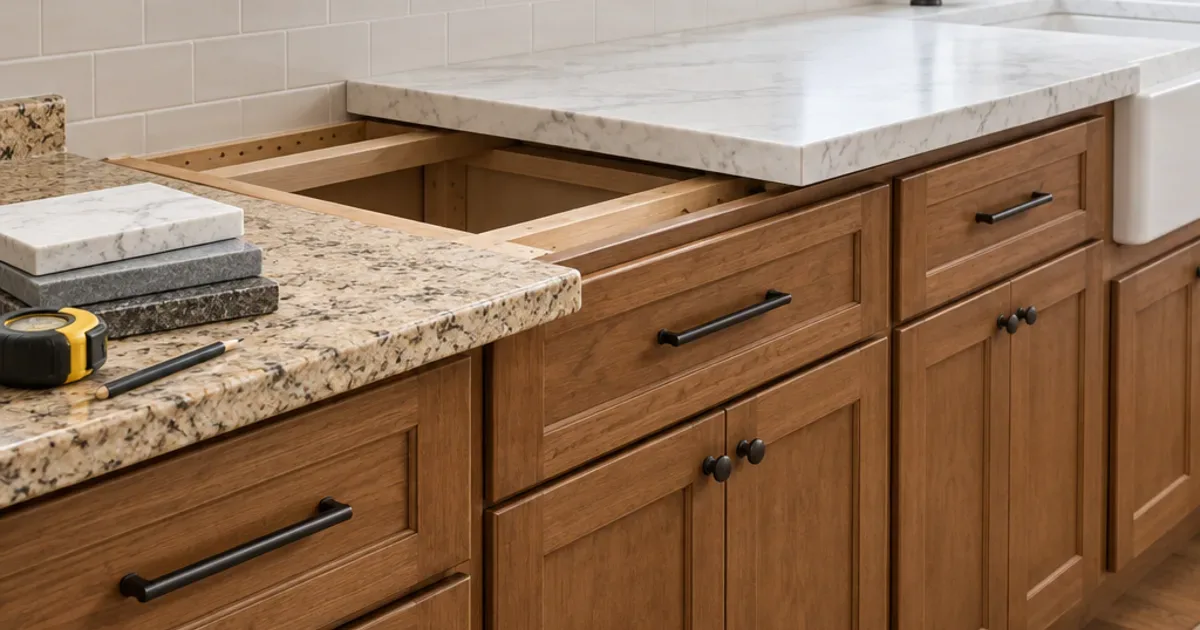
Yes, in most kitchens you can replace countertops without replacing cabinets, provided the cabinet boxes are structurally sound, level and able to carry the weight of the new surface. The cabinets are the foundation of the countertop, so whether this works depends on their condition rather than their age or style. Many homeowners keep solid cabinets, refresh them with paint or new hardware, and put the budget into a new surface. If you are weighing a partial update against a fuller kitchen remodeling atlanta georgia project, the checks below will help you decide which one makes sense.
Why Countertops and Cabinets Can Be Treated Separately
Base cabinets and countertops are separate components. The countertop rests on the cabinet boxes and is fastened to them with adhesive, screws through corner blocks, or brackets, depending on the material. Because the two are not built as one piece, the top can usually be removed and a new one set on the same boxes.
The connection still matters in two ways:
- Load: Stone surfaces such as granite and quartz are much heavier than laminate. Cabinets that held laminate for decades may need reinforcement before they can carry stone.
- Fit: Fabricators template new tops to the cabinets as they are now. If the boxes are out of level, racked or water-damaged, the new countertop will show those problems through gaps, cracked seams or rocking.
The real question is therefore not whether it is possible. It is whether your cabinets are good enough to build on.
How to Tell If Your Cabinets Can Support New Countertops
Check these points before you pay for templating.
1. Structural Condition
Open every base cabinet and inspect it with a flashlight. Look for:
- Swollen, soft or delaminating particleboard, especially under the sink and near the dishwasher
- Loose face frames or separated joints
- Sagging cabinet bottoms or bowed side panels
- Signs of past leaks, such as staining, mold or warping
Plywood boxes in good condition are generally a strong base. Particleboard that has been wet is often the weak point.
2. Level and Square
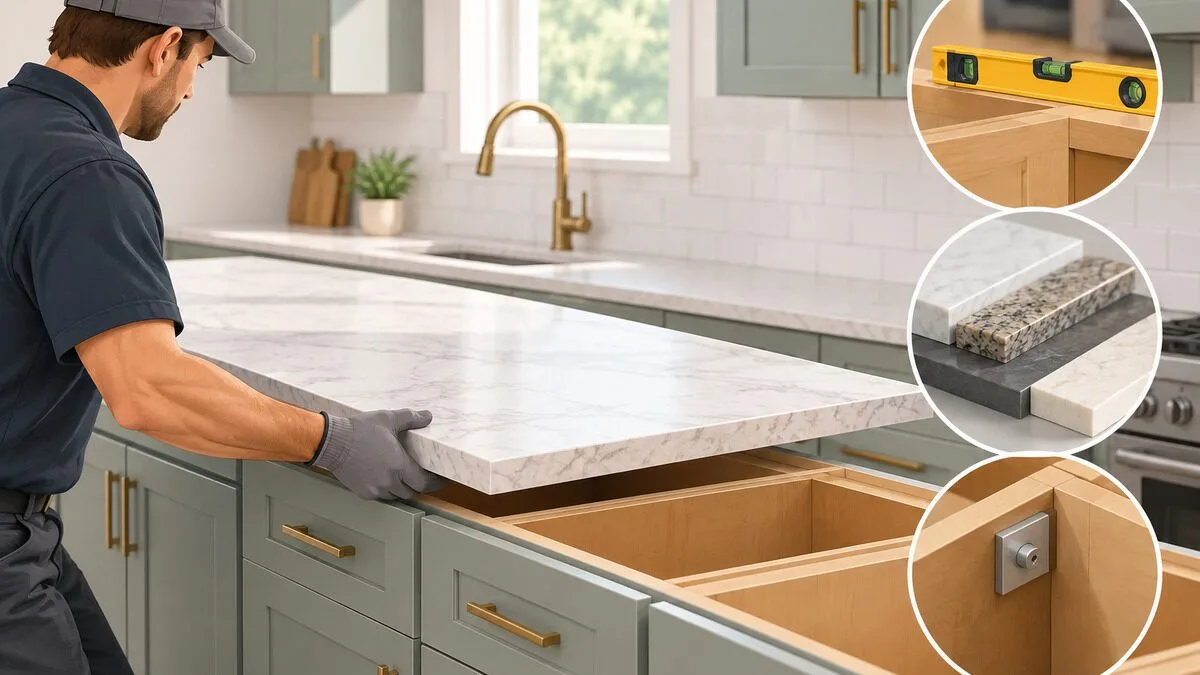
Put a 4-foot level across the cabinet tops front to back and side to side. Small variations can often be corrected with shims during installation. Larger dips may mean the floor or the cabinet base needs attention first. Also check that cabinets meet walls and each other without wide gaps.
3. Layout You Intend to Keep
You are keeping the footprint, so be sure you like it. If you want to move the sink, add a kitchen island, or change appliance locations, keeping the cabinets can limit those plans.
4. Appliance and Sink Compatibility
An undermount sink, a new cooktop or a different dishwasher may need cabinet modifications. Confirm that the sink base is wide enough for the sink you want and that the cutouts will line up with the existing boxes.
Choosing a Countertop Material for Existing Cabinets
Material choice affects whether you need reinforcement. The comparisons below are general, not engineering specifications. Ask your installer to evaluate your specific cabinets.
- Material: Laminate; Relative Weight: Light; Cabinet Considerations: Rarely needs reinforcement
- Material: Solid surface; Relative Weight: Moderate; Cabinet Considerations: Usually fine on sound cabinets
- Material: Butcher block; Relative Weight: Moderate; Cabinet Considerations: Needs a level base; watch for moisture near sinks
- Material: Quartz; Relative Weight: Heavy; Cabinet Considerations: Cabinets must be sturdy and level; overhangs may need supports
- Material: Granite and natural stone; Relative Weight: Heavy; Cabinet Considerations: Same as quartz; check older or lightweight boxes carefully
Overhangs need extra attention. An eating bar or a deep overhang on a peninsula often requires brackets or corbels, whatever the cabinets are like.
Step-by-Step: Replacing Countertops While Keeping Cabinets
- Inspect and repair. Fix loose joints, replace damaged panels and resolve any plumbing leaks before anything else.
- Choose material, sink and faucet. Fabricators usually need the sink and faucet specifications before templating.
- Decide on cabinet refinishing timing. If you plan to paint or refinish the cabinets, discuss the order with your contractor. Painting first means the new top can be protected during the work. Painting after risks drips on the new surface.
- Template the cabinets. The installer measures the cabinets as they stand, so everything must be level and final before this step.
- Remove the old countertop. Disconnect plumbing and appliances. Careful removal protects the cabinet tops, face frames and walls.
- Reinforce if needed. Add plywood subtops, support strips or brackets where the material or overhang calls for them.
- Install and connect. Set the top, seal the seams, mount the sink and reconnect the plumbing.
- Update the backsplash. Removing an old top often damages the existing kitchen backsplash or leaves a visible line, so plan for a new or repaired one.
Common Mistakes to Avoid
- Ignoring hidden water damage. A new stone top on a rotting sink base is an expensive mistake.
- Forgetting the backsplash. Old tile may not line up with the new countertop's thickness or depth.
- Mismatched style. A high end kitchen countertop on worn, dated doors can make the cabinets look worse. Budget for at least new hardware or refinishing.
- Assuming the old sink fits. Undermount installations and new cutouts often require a different sink.
- Skipping overhang support. Unsupported stone overhangs can crack.
Illustrative Example (Hypothetical)
This is an invented scenario to show the decision process. It is not a real customer result.
A homeowner has 20-year-old plywood kitchen cabinets with laminate tops and wants quartz. Inspection finds solid boxes, but the sink base floor is swollen from an old leak, and one run of cabinets dips noticeably toward the corner. The plan becomes: replace the sink base panel, shim the run level, paint the doors, add new pulls, and then template for quartz with corbels under a small breakfast overhang. The homeowner keeps the cabinets but fixes their weak points first. That is the balance most successful countertop-only projects strike.
When Replacing Cabinets Makes More Sense
Keeping cabinets is not always the better value. Consider new cabinets if:
- The boxes have widespread water damage or failing materials
- You want to change the layout or add an island
- The doors, drawers and storage no longer work for you
- You are investing in premium stone and do not want it sitting on cabinets you may replace in a few years
Tearing out cabinets later usually means removing and possibly damaging the new countertop, so think long term. If you are leaning toward new cabinetry, browsing kitchen cabinet options can help you compare styles before committing either way.
Conclusion
You can replace kitchen countertops without replacing cabinets as long as the cabinets are solid, level and suited to the weight of the new material. Inspect for water damage, confirm the layout works for you, choose a material your cabinets can support, and plan the backsplash and refinishing order before templating. If the inspection turns up serious problems, replacing cabinets and countertops together may be the smarter investment. For a professional opinion on whether your cabinets are ready for new countertops, or whether a broader update makes more sense, reach out to homescabinet and request an assessment of your kitchen.
Frequently asked questions
Will removing my old countertop damage my cabinets?
It can, especially with glued-down laminate or tile. Careful installers cut adhesive and remove fasteners slowly to protect the cabinet tops and face frames. Minor touch-ups are common, so inspect the cabinets after removal and before the new top goes on.
Can I paint my cabinets after the new countertops are installed?
Yes, but you will need to mask the countertop edges carefully and protect the surface from sanding dust and drips. Many people find it easier to paint first, then have the countertop installed. Discuss the timing with your contractor before templating.
Do I need new countertops if I only want to change cabinet doors?
No. Refacing or replacing doors and drawer fronts can usually be done without touching the countertop. Just make sure the new doors suit the existing countertop color and style.
How long does a countertop-only replacement take?
Timelines vary with the material and the fabricator's schedule, and you should get one from your installer. Stone tops typically involve a templating visit, a fabrication period, and then an installation day. During that window, plan for limited use of the sink and kitchen.
Planning guidance from Homes Cabinet. Product specifications, site conditions and the agreed scope determine the right solution for your home. Illustrative examples are not project quotations or promises of a particular result.
← Explore more remodeling guides