
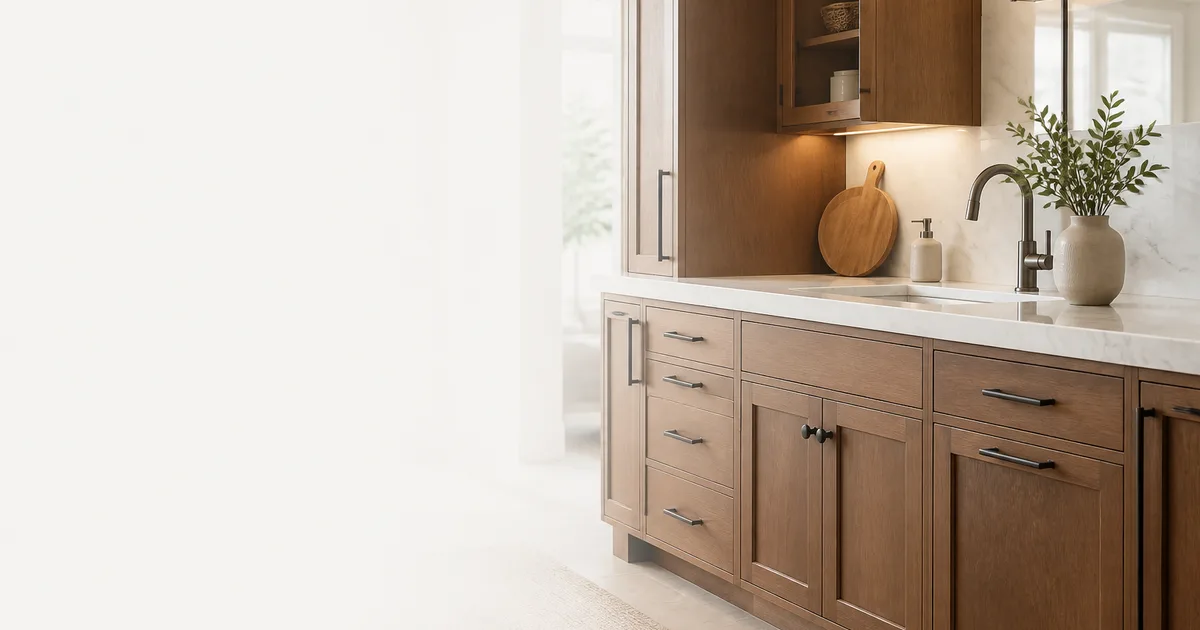
Replacing countertops without replacing cabinets is one of the smartest budget moves in any Atlanta kitchen remodel — when the cabinets underneath are actually up to the job. New quartz or granite can instantly give a dated room a high end kitchen feel for a fraction of a full gut renovation, but the countertops only perform as well as the boxes supporting them. Before you order slabs, it pays to understand what installers look for during a countertop service evaluation: box construction, level, layout, and how your cabinets will look beside a brand-new surface.
First Question: Are Your Cabinets Structurally Ready?
Stone is heavy. A 3cm quartz or granite top can weigh 18–22 pounds per square foot, which means an average Atlanta kitchen carries several hundred pounds of material across the perimeter and kitchen island. Your existing cabinets need to carry that load without racking or sagging.
Look for these green flags:
- Solid box construction. Plywood or thick furniture-board boxes handle stone well. Thin particleboard sides with stapled joints are riskier.
- Intact face frames. Cracked or separating frames should be repaired before new counters go on.
- Level, square runs. Installers can shim minor variation, but seriously out-of-level cabinets telegraph into the countertop seams.
- Secure wall attachment. Base cabinets should be screwed to studs and to each other, not just resting on the floor.
Older homes in neighborhoods like Decatur, Kirkwood, and parts of Marietta often have site-built cabinets that are surprisingly sturdy. Mid-2000s builder-grade cabinets, on the other hand, sometimes need reinforcement — extra blocking, plywood decking, or new corner braces — before stone can go down safely.
Removing the Old Countertop Without Wrecking the Cabinets
This is where DIY attempts most often go wrong. Old laminate tops are usually glued and screwed to the cabinet rails; tile counters sit on mortar beds and plywood substrates. Prying either one off aggressively can split face frames, tear out cabinet tops, or pull the finish right off the stiles.
Careful demolition means scoring caulk lines, unscrewing from inside the cabinets, cutting the old substrate into sections, and lifting rather than levering. Plan for a few scars regardless — toe kicks, backsplash edges, and the top edge of the face frame commonly need touch-up. Budget for minor cabinet repair as part of the project rather than treating it as a failure.
Where the Backsplash Fits In
Removing a countertop almost always damages the wall behind it. If you have a 4-inch laminate coved backsplash, expect drywall repair. If you have full-height tile, expect to lose the bottom row or two.
That makes this the natural moment to rethink your kitchen backsplash. A new backsplash is relatively inexpensive compared to cabinetry, and it does enormous visual work — it's the element that ties new counters to older cabinets. Warm white cabinets plus a crisp zellige or subway tile reads bright and collected, the kind of clean, cheerful look you see in Preppy Kitchen or Craft Street Kitchen recipe photos. Darker cabinets pair well with a light, low-contrast slab backsplash that keeps the room from closing in.
Choosing a Surface That Flatters Cabinets You're Keeping
Since the cabinets stay, the countertop has to do the harmonizing.
Quartz
Engineered quartz is the most popular choice in Atlanta kitchens right now: non-porous, no sealing, and available in consistent patterns that photograph beautifully. It's forgiving next to painted cabinets because the color is predictable.
Granite and Quartzite
Natural stone brings movement and depth. If your cabinets have a strong wood grain, a busier granite can compete — sample slabs in your own kitchen light before committing.
Butcher Block and Solid Surface
A wood island top beside stone perimeter counters is an affordable way to add warmth, especially in homes where the island is the room's focal point.
Bring a cabinet door with you to the slab yard. Showrooms — whether an independent stone supplier or a big-name destination like a Ferguson Bath Kitchen and Lighting Gallery — have aggressive lighting that makes undertones read differently than they will at home.
When Keeping the Cabinets Isn't the Right Call
Sometimes countertops are the wrong place to start. Reconsider if:
- Cabinet interiors are swollen, moldy, or water-damaged
- You want to change the layout, move the sink, or add a kitchen island
- Doors and drawers no longer close, with worn-out hardware throughout
- The cabinet finish is failing and won't accept a refinish
In those cases, putting premium stone on failing boxes means paying twice. Homeowners searching for "kitchen remodeling near me" or "kitchen renovation near me" often discover that a hybrid approach — new boxes where needed, new counters throughout — costs less than two separate projects a few years apart. Our kitchen remodeling atlanta georgia team walks homeowners through that comparison before any demo begins.
Budget-Friendly Ways to Refresh Cabinets You're Keeping
If the boxes are sound, you have good options short of replacement:
- Repaint or refinish doors and frames to match the new counters
- New doors and drawer fronts on existing boxes, including RTA cabinets doors sized to standard openings
- Hardware swap — pulls and hinges are the cheapest meaningful upgrade in the room
- Add a cabinet or two for storage, matched to the existing finish
- Under-cabinet lighting, which makes any countertop look more expensive
The same logic applies to bathroom cabinets. If a vanity box is solid, a new stone top, sink, and faucet can modernize the whole room — a common pairing with a bathroom remodeling project done alongside the kitchen.
Sequencing and Timeline
A typical countertop-only project in Atlanta runs like this: in-home measure and cabinet assessment, slab selection, digital templating after demolition, fabrication (usually 1–2 weeks), then installation in a single day. Plumbing disconnect and reconnect bracket the install. Plan to be without a sink for 24–48 hours.
Do not template before the old counters are off and the cabinets are leveled. Templating over an uneven base is the number one cause of gaps, rocking, and visible seams.
The Bottom Line for Atlanta Homeowners
Replacing countertops while keeping your cabinets works beautifully when the boxes are structurally sound, the layout still functions, and you budget for backsplash and drywall repair. It fails when it's used to mask cabinets that are already at the end of their life.
Start with an honest assessment of what you have. If you're weighing a counter-only update against a full kitchen remodel, the team at homescabinet can evaluate your existing cabinets, talk through surface options, and help you decide which path actually fits your home and timeline.