
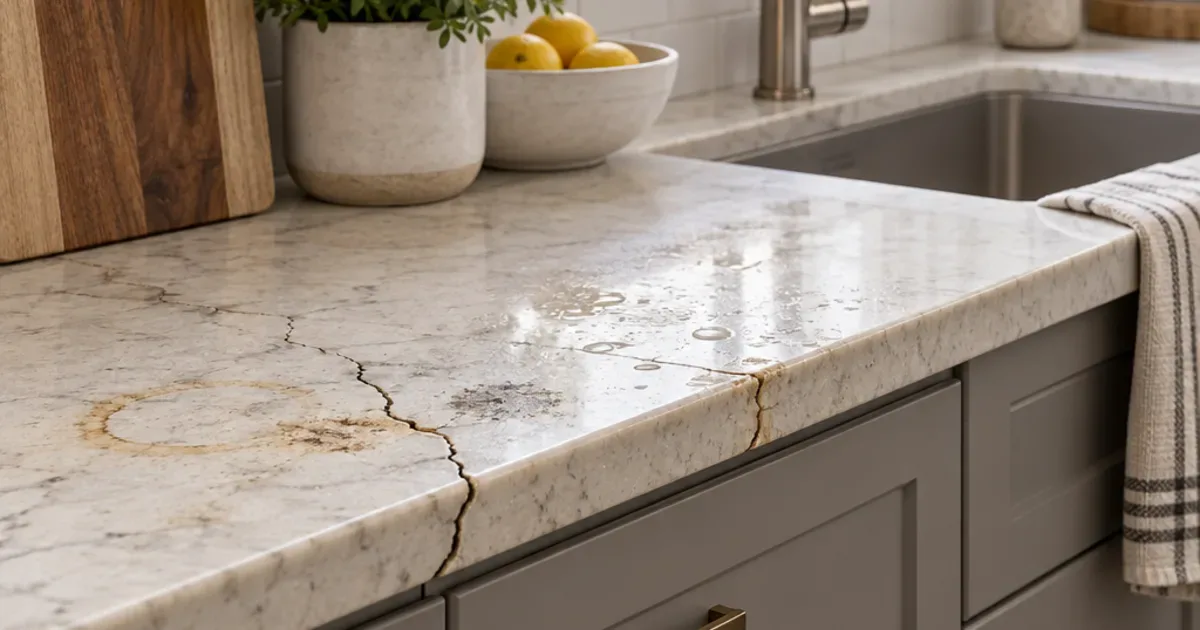
It's time to replace your kitchen countertops when the damage is structural or keeps coming back. That includes deep cracks, a swollen or soft substrate, seams that keep separating, and surfaces you can no longer keep clean or sanitary. Cosmetic issues like a single chip or light etching can often be repaired. Repeated problems, or problems below the surface, usually can't. Countertops also don't exist in isolation. They sit on your cabinets, meet your backsplash, and set the tone for your whole layout. That's why many homeowners weigh replacement as part of a broader kitchen remodeling atlanta georgia project.
Repair or Replace: The Quick Decision Rule
Before going through the signs, use this simple filter:
- Repair when the damage is isolated, on the surface, and hasn't come back after a fix. A single chip, a small burn mark, or light dulling are typical examples.
- Replace when the damage reaches the substrate or structure, when it shows up in several places, or when you've already repaired the same problem before.
Keep that rule in mind as you check your own counters against the seven signs below.
1. Cracks That Are Deep, Growing, or Near Seams
Hairline surface cracks in stone can sometimes be filled with resin. Other cracks point to a bigger problem and are worth checking closely:
- Cracks you can catch with a fingernail
- Cracks that get longer over a few weeks
- Cracks that run near the sink cutout or cooktop
Cracks like these often mean the slab is under stress. Common causes include uneven cabinet support, settling, or heat.
How to check: Mark both ends of the crack with a pencil and look again in two to four weeks. If it has grown past your marks, a patch is unlikely to last.
Common mistake: Filling a growing crack without fixing the support underneath. The crack tends to come back, sometimes right next to the repair.
2. Water Damage, Swelling, or Soft Spots
This sign matters most for laminate and butcher block. Look for:
- Bubbling or lifting edges around the sink
- A substrate that feels spongy when you press on it
- Dark staining spreading out from seams
Once water reaches the particleboard core beneath laminate, the material swells and can't be dried back to its original shape.
Water damage at the counter often means moisture has reached the cabinet box underneath as well. Before you order a new top, look inside the sink base. Check for warped panels, a musty smell, or delaminated shelving. Setting new countertops on compromised cabinets is a costly mistake.
3. Stains and Etching You Can't Remove
Some materials are porous, and unsealed or poorly maintained stone can absorb oils, wine, and coffee. Marble etches when it touches acids like lemon juice or vinegar.
Professional polishing and resealing can rescue many stone surfaces. That makes this the sign where repair is most often worth trying first.
Replace instead if any of these apply:
- Stains have come back after professional cleaning.
- Etching covers most of your main prep area.
- You find yourself avoiding parts of the counter because of how they look.
4. Failing Seams and Loose Sections
Seams on a well-installed countertop should be tight and level. Watch for these warning signs:
- A visible lip you can feel
- Gaps where crumbs and moisture collect
- A section that shifts slightly when you lean on it
Any of these can mean the adhesive has failed or the cabinets below have moved.
Re-seaming is sometimes possible. If the cause is uneven or sagging cabinetry, though, the seam will keep failing until that support is corrected.
5. Hygiene Problems You Can't Clean Away
Damage becomes a food-safety concern when it creates places for grime to collect. Watch for:
- Deep knife scoring
- Chipped laminate edges that expose the core
- Caulk lines that have turned black from mold
If a surface can no longer be wiped fully clean, it isn't doing its job. This is one of the strongest reasons to replace your counters, especially in a kitchen where you cook raw meat often.
6. Your Layout No Longer Works
Sometimes the countertop itself is fine, but the kitchen around it isn't. Common examples include:
- Not enough prep space between the sink and the stove
- No landing zone next to the refrigerator
- A desire to add a kitchen island with seating
You usually can't extend existing slabs to match new ones, so layout changes almost always mean new countertops. This is the point where it makes sense to plan your counters and cabinets together. Reviewing kitchen cabinet options at the same time helps your base cabinets, island dimensions, and countertop overhangs work as one system.
Decision criteria for a layout-driven replacement:
- Can you get the workspace you need by changing only the countertop, or do the cabinets need to change too?
- Will a new island leave enough walkway clearance? Measure this carefully before committing.
- Does your new backsplash need to meet a different countertop height or edge profile?
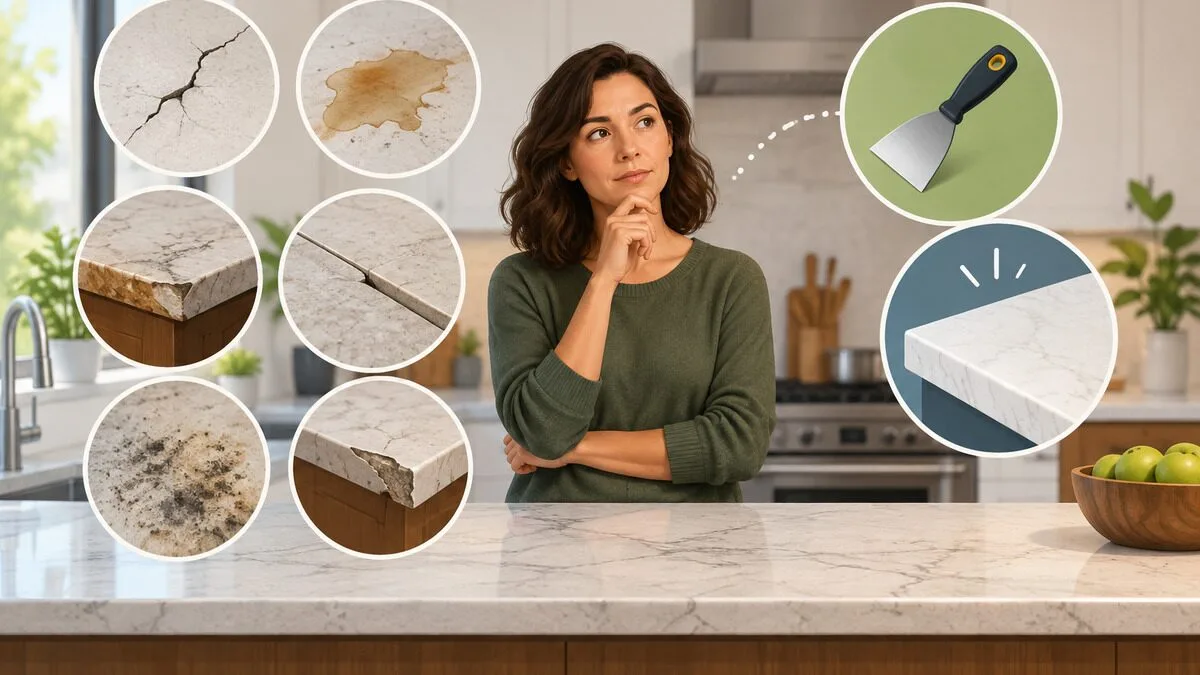
7. Outdated Look Ahead of a Remodel or Sale
Countertops are one of the most visible surfaces in a kitchen. If yours clash with updated cabinets or a new kitchen backsplash, or if they make the room look dated to potential buyers, replacing them can be a reasonable choice even without damage.
The tradeoff: Replacing countertops that are in good condition for purely cosmetic reasons is a judgment call. Think about how long you plan to stay in the home and whether the new countertop fits your overall plan. A countertop you choose now should still suit the cabinets and backsplash you're likely to want later.
Illustrative Example: Working Through the Signs
This is a hypothetical scenario, not a real customer result.
A homeowner has 20-year-old laminate counters and notices three problems:
- The edge near the sink is lifting.
- The surface feels soft when pressed.
- One corner seam has opened slightly.
Running through the checklist:
- Sign 2 applies. The soft spot suggests the core has absorbed water.
- Sign 4 applies. The seam gap confirms moisture or movement.
- The sink base inspection turns up a warped cabinet floor.
Conclusion: Repairing the laminate alone wouldn't solve the problem. The sensible next step is to repair or replace the sink base and fix any leak, then install the new countertop. Because the homeowner also wants more prep space, they use the project to reconsider the layout instead of copying the old footprint.
Steps to Take Before You Replace
- Document the damage. Take photos and note the location of every problem.
- Inspect the cabinets underneath. Check that they are level, dry, and solid.
- Fix any leaks at the sink, dishwasher, or refrigerator line first.
- Decide on your scope: countertops only, countertops plus backsplash, or a fuller remodel.
- Choose a material that suits how you use your kitchen. Consider heat, acids, knives, and how much maintenance you're willing to do.
- Get an in-person measurement and estimate before you commit to a material or layout.
Conclusion
Replacing your countertops makes sense when the damage is structural, keeps coming back, or creates a hygiene problem, or when your layout no longer works for you. Small, cosmetic, one-time damage is usually worth repairing. Before you choose a new material, check the cabinets underneath and decide how far you want the project to go. If you're ready to get a clear picture of your options, the team at homescabinet can help you plan countertops and cabinets together. A practical first step is to photograph your trouble spots and request an in-person evaluation.
Frequently asked questions
Can I replace countertops without replacing my cabinets?
Often, yes, as long as the cabinets are level, structurally sound, and free of water damage. Heavier materials like stone need firm, even support. A contractor should confirm your cabinets can carry the weight before you order.
Will I have to replace my backsplash too?
Not always, but removing old countertops frequently damages the bottom row of tile or the wall behind it. New countertops can also differ slightly in thickness, which can leave a visible gap. Many homeowners plan for at least a partial backsplash update.
How long does countertop replacement take?
The timeline varies with the material, the fabrication process, and whether other work is involved. Typical steps include removal, measuring or templating, fabrication, and installation, and the sink may be out of use for part of that time. Ask your installer for a specific schedule.
Is it better to replace countertops before or after a cabinet upgrade?
If you're changing cabinets, do the cabinets first or plan both together. Countertops are templated to fit the cabinets they sit on, so installing new counters on cabinets you'll soon replace usually means paying for countertops twice.
Planning guidance from Homes Cabinet. Product specifications, site conditions and the agreed scope determine the right solution for your home. Illustrative examples are not project quotations or promises of a particular result.
← Explore more remodeling guides