
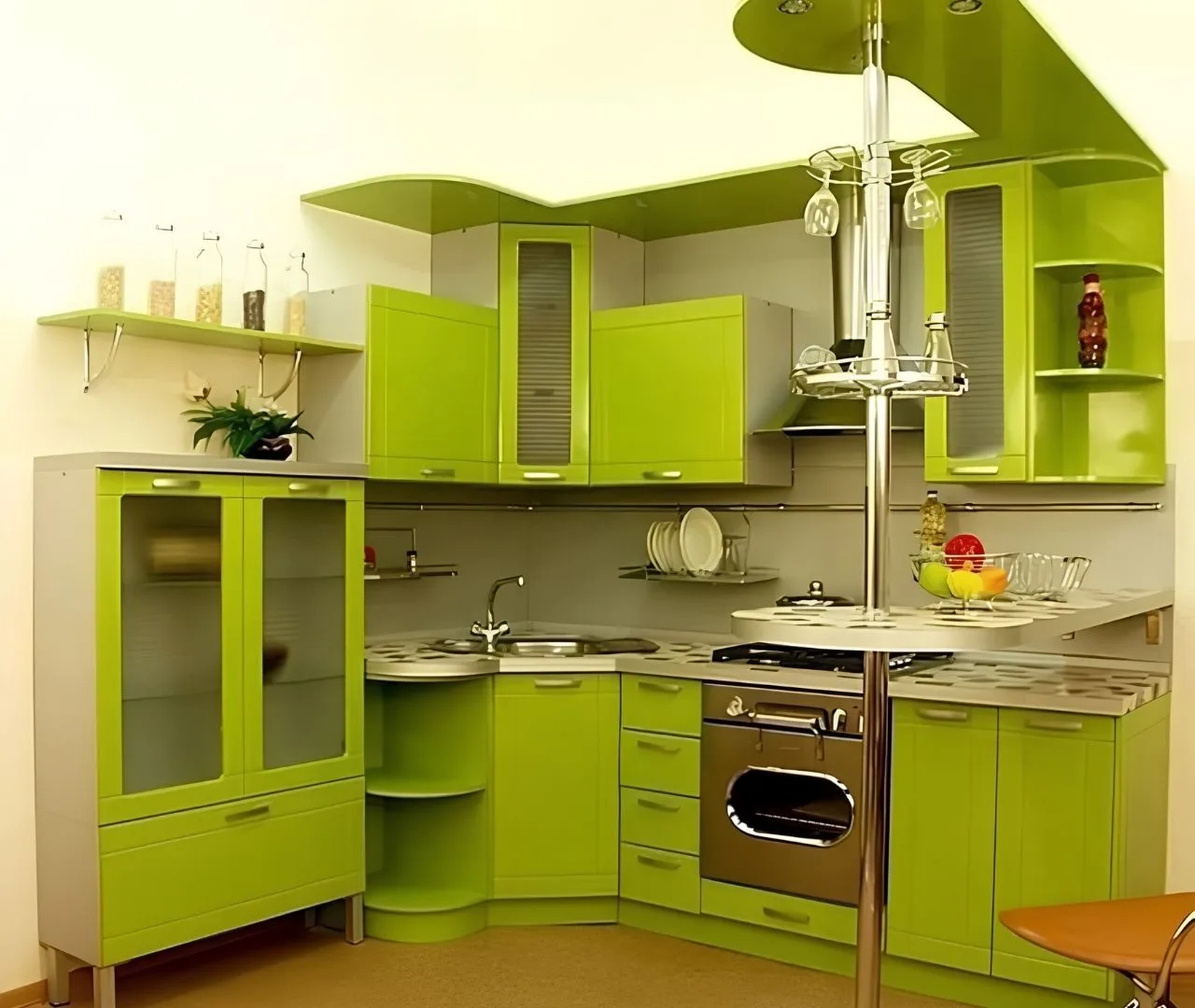
Stock vs Semi-Custom vs Custom Kitchen Cabinets: Key Differences

You’ve decided to renovate your kitchen. You’ve got a budget range in mind, you’ve been saving inspiration photos for months, and now you’re standing in front of three very different price points wondering what actually separates them. Stock, semi-custom, and custom kitchen cabinets are not just marketing tiers — they represent fundamentally different products, processes, and outcomes. Getting this decision right shapes everything that follows.
Most buyers make this choice before they fully understand what each option delivers. The result is either overspending on features they didn’t need, or under-investing and living with compromises that show up every single day. This guide breaks down what each cabinet type actually means, who it works for, and how to match the right choice to your specific project.

What Stock Cabinets Are and When They Make Sense

Stock cabinets are pre-built, mass-produced units that sit in a warehouse or on a showroom floor ready to ship immediately. They come in fixed sizes — typically in two-inch width increments — and a limited range of door styles, finishes, and configurations. What you see is what you get, and delivery is fast because the product already exists.
For a large portion of kitchen renovations, stock kitchen cabinets are a completely rational choice. If your kitchen has a straightforward layout, standard ceiling height, and walls that meet at reasonable right angles, stock sizing works without forcing major compromises. The quality range within stock cabinets is wider than most buyers realize — entry-level big-box options and mid-range stock lines from dedicated cabinet suppliers are very different products despite falling under the same category label.
The honest limitation of stock cabinets is inflexibility. When your kitchen has an odd corner, a window in an unexpected spot, or ceiling height that doesn’t match standard upper cabinet dimensions, you’ll spend time and money on filler pieces, trim work, and workarounds that add up quickly. A kitchen that fights against stock sizing rarely looks as clean as one that was planned around it.
Budget-wise, stock cabinets represent the lowest entry point — which makes them the default choice for rental property renovations, flips, and projects where resale value rather than personal enjoyment is the primary goal.

How Semi-Custom Kitchen Cabinets Work

Semi-custom cabinets are built to order but within a defined system of options set by the manufacturer. You’re not choosing from whatever is sitting in a warehouse — you’re selecting from a menu of sizes, finishes, interior configurations, and features that the manufacturer has pre-engineered. The result ships in weeks rather than days, but you get meaningfully more flexibility than stock allows.
This is where most serious kitchen renovations land, and for good reason. Semi-custom lines offer size increments as small as half an inch or three inches depending on the manufacturer, which means the filler pieces and awkward gaps that plague stock installations mostly disappear. Door style options are broader, finish choices include paint colors matched to your specification, and interior features like pull-out shelves, soft-close hardware, and specialty drawer configurations are available as add-ons rather than afterthoughts.
For homeowners pursuing modern kitchen cabinets with clean sightlines, integrated hardware, and a finished look that doesn’t read as off-the-shelf, semi-custom is where that becomes achievable without the lead time and cost of fully custom work. The manufacturing is still factory-based, which keeps quality consistent and pricing within reach for mid-to-upper renovation budgets.
The trade-off is that you’re still working within someone else’s system. If you have a highly specific vision — a particular wood species, an unusual dimension, a door profile that doesn’t appear in any manufacturer’s catalog — semi-custom will get you close but not exact.

What Makes Custom Kitchen Cabinets Different

Custom cabinets are built from scratch to your exact specifications by a cabinetmaker or custom shop. There are no size constraints, no preset menus of options, and no catalog to flip through. The dimensions, materials, joinery methods, interior layout, and every surface finish are determined by your project requirements and your designer’s vision rather than a manufacturer’s production line.
This is where kitchen cabinet design ideas that exist only in your head become physical objects. An unusual ceiling height that would require stacking cabinets in any other scenario gets addressed with a single unit built to fit. A curved island face, a built-in appliance garage sized to your exact coffee machine, a door profile milled from reclaimed white oak — all of these are questions of execution rather than possibility.
Custom work comes with two real costs beyond the price tag. Lead times are measured in months, not weeks, and the process requires active involvement from the homeowner or designer throughout. Changes mid-production are expensive. The relationship with your cabinetmaker or custom shop matters enormously because you’re not buying a product off a system — you’re commissioning work.
For the best kitchen cabinets in a high-end renovation where the kitchen is a significant design statement and budget is not the primary constraint, custom is the appropriate choice. For a kitchen that will be photographed, published, or used as a showpiece property, the difference between semi-custom and custom is visible and worth the investment.

Comparing Quality Across All Three Cabinet Types

Quality in kitchen cabinets is less about which tier you choose and more about what you’re actually buying within that tier. A well-built semi-custom cabinet from a reputable manufacturer will outlast a poorly built custom cabinet from a low-end shop. Here’s what to evaluate regardless of category.

Box Construction

The cabinet box — the structure that holds everything together — should be made from plywood rather than particleboard wherever possible. Plywood handles moisture better, holds screws more reliably over time, and resists warping under the kind of temperature and humidity variation that kitchens experience regularly. Many stock cabinets use particleboard boxes to hit price points. Many semi-custom and custom lines use plywood as standard. Ask specifically, because marketing language around this is often vague.

Door and Drawer Construction

Solid wood doors in any tier will hold paint and stain better than MDF doors over time, though quality MDF with proper priming performs well in painted applications. Drawer boxes should be dovetail-jointed solid wood or plywood with metal slides rated for the weight you’ll actually put in them. Undermount soft-close slides are worth specifying in any tier — they extend drawer life significantly and eliminate the daily irritation of drawers that slam.

Finish Quality

For modern kitchen cabinets with painted finishes, factory-applied lacquer or conversion varnish will outperform site-painted cabinets in durability and uniformity every time. This is one area where factory production has a genuine advantage over custom shop work — spray finishing in a controlled environment produces results that field application can’t consistently match.

Kitchen Cabinet Design Ideas Across All Three Tiers

The tier you choose doesn’t limit how well your kitchen can look. Strong kitchen cabinet design ideas execute well within stock, semi-custom, and custom depending on how thoughtfully the project is planned.
Two-tone layouts — darker lowers, lighter uppers, or a contrasting island — work across all three tiers and add visual depth without requiring custom dimensions. Integrated toe kicks, flat panel doors, and hardware-free push-to-open systems are available in semi-custom lines and deliver the same clean aesthetic as custom work in most kitchen layouts. Floor-to-ceiling cabinetry, one of the strongest moves in contemporary kitchen design, requires semi-custom or custom sizing to execute properly because standard upper cabinet heights rarely reach ceiling.
For open-concept kitchens where the cabinetry is visible from adjoining living spaces, investing in semi-custom or custom work for the perimeter while using stock for a pantry or utility area is a practical middle path that most renovation budgets can accommodate.

How to Choose the Right Option for Your Kitchen

The right answer depends on three variables: your layout complexity, your design specificity, and your budget timeline.
If your kitchen is a standard rectangular layout with conventional dimensions and you’re working with a tight budget or a flip timeline, stock cabinets from a quality mid-range supplier deliver the best kitchen cabinets outcome per dollar. If your kitchen has unusual dimensions, you want finishes that go beyond the standard palette, or you’re planning to live in this home for a decade or more, semi-custom is the tier where the investment pays back through daily use and long-term durability. If your kitchen is a central design feature of the home and you have specific requirements that no manufacturer’s system can meet, custom work is worth every additional dollar and every additional week of lead time.

Conclusion

Stock, semi-custom, and custom kitchen cabinets each serve a real purpose. The mistake most buyers make is choosing a tier based on budget alone rather than matching the tier to what the project actually demands. Understand what your kitchen layout requires, be honest about how specific your design vision is, and choose accordingly.
If you’re looking for a cabinet partner that covers all three tiers — from well-built stock options for straightforward renovations to semi-custom and custom solutions for kitchens that need to be exactly right — Homes Cabinet brings the product range, design expertise, and build quality to support every stage of your project. Whether you’re working with modern kitchen cabinets in a clean contemporary layout or exploring kitchen cabinet design ideas for a more distinctive space, Homes Cabinet delivers the best kitchen cabinets without asking you to compromise on what matters most.

April 13,2026